Understanding why your logo is only the beginning of your brand.
The difference between a logo vs. brand identity is something many business owners misunderstand. Creating a logo doesn’t mean you’ve created a brand. It’s an easy assumption to make because the logo is the most recognizable part of a company’s identity. But while a logo is an important asset, it’s only one piece of a much larger picture.
Your brand is built through every visual interaction people have with your business, from your website and marketing materials to your photography, packaging, typography, and even the way information is presented. When these elements work together consistently, they create trust, recognition, and a memorable customer experience.
In this article, we’ll break down the difference between a logo and a brand identity, explain why both matter, and help you determine whether your business needs a simple logo update or a more comprehensive brand refresh.
What Is a Logo?
A logo is the visual mark that identifies your business. It may be a wordmark, symbol, initials, or a combination of these elements.
Its primary job is simple:
To help people recognize your company.
Think of your logo as your signature. It’s the symbol customers associate with your business, but it doesn’t tell the whole story on its own.
Examples of logo styles include:
- Wordmarks (Google)
- Lettermarks (IBM)
- Symbols (Apple)
- Combination marks (Adidas)
- Emblems (Harley-Davidson)
A great logo is memorable, scalable, and appropriate for your brand. But by itself, it doesn’t create a complete brand experience.
What Is a Brand Identity?
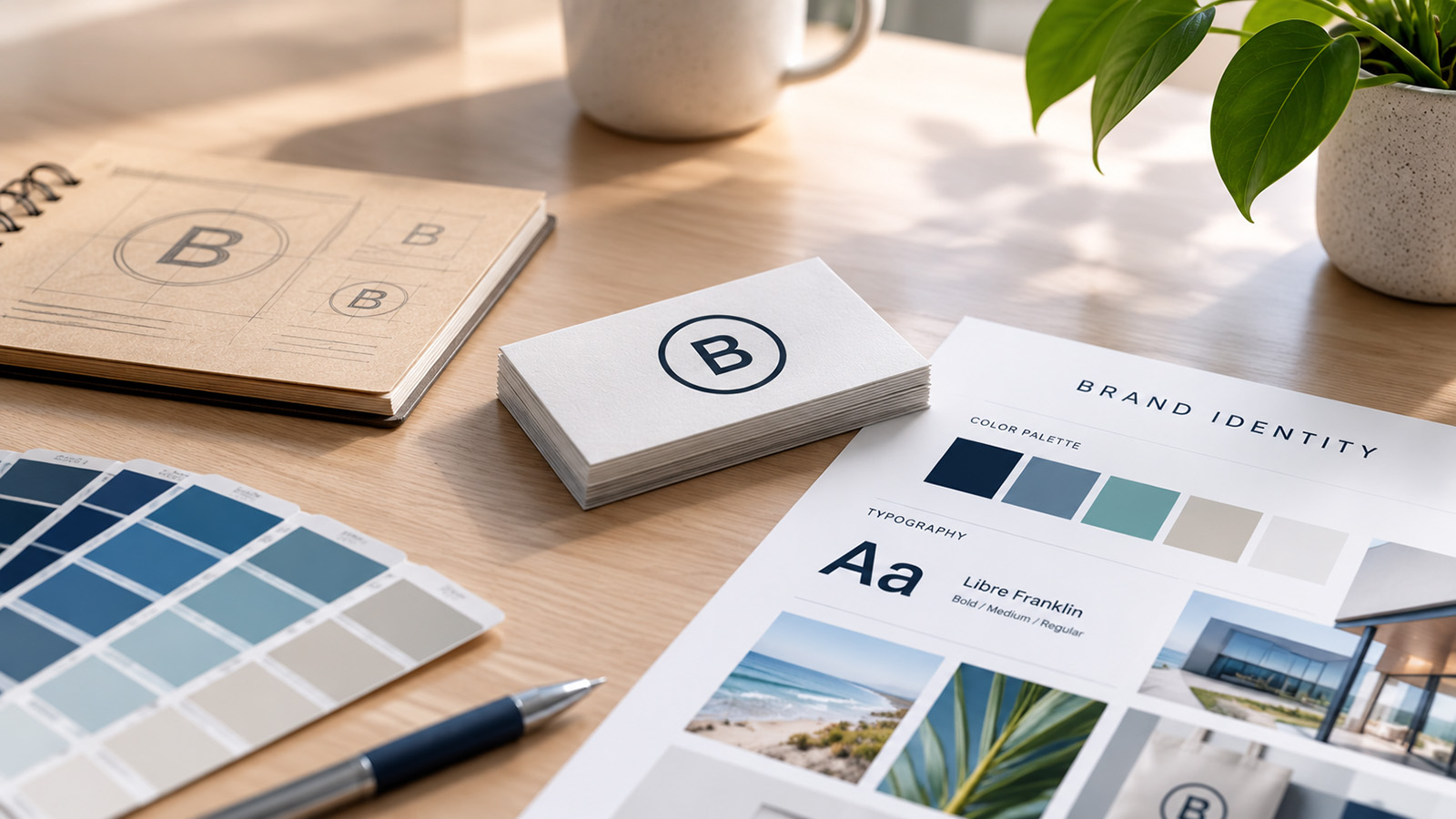
A brand identity is the complete visual system that brings your brand to life.
It includes everything that creates a consistent and recognizable look across every customer touchpoint.
A brand identity typically includes:
- Logo system
- Color palette
- Typography
- Photography style
- Iconography
- Graphic elements and patterns
- Page layouts
- Marketing collateral
- Website design
- Social media graphics
- Packaging
- Brand guidelines
When all of these elements work together, they create consistency, build trust, and make your business instantly recognizable.
Think of It Like a House
One of the easiest ways to understand the difference is with this analogy.
Your logo is the front door.
It identifies the house.
Your brand identity is everything else.
It includes the architecture, paint colors, furniture, landscaping, lighting, and overall style.
The front door is important, but it doesn’t define the entire experience.
The same is true for your business.
Why Brand Identity Matters
Many businesses assume they need a new logo when something feels outdated.
Often, that’s not the real issue.
Instead, they may have:
- Inconsistent colors
- Multiple fonts
- Generic stock photography
- Different styles across marketing materials
- No visual standards
- An inconsistent customer experience
The logo isn’t the problem.
The brand identity simply lacks consistency.
A well-developed identity helps every piece of communication feel like it belongs to the same company.
Consistency Builds Trust
Customers notice consistency, even if they don’t realize it consciously.
When your website, brochures, social media, email campaigns, presentations, photography, and signage all share the same visual language, your company appears more professional and established.
That consistency builds confidence and confidence often leads to stronger customer relationships.
So, Do You Need a New Logo or a New Brand Identity?
Ask yourself a few questions:
- Does our logo still represent who we are?
- Do all of our marketing materials look like they belong together?
- Are we using consistent colors and typography?
- Does our photography reflect our brand?
- Would someone recognize our company without seeing our logo?
If you answered “no” to several of these questions, your business may benefit more from strengthening its brand identity than simply redesigning the logo.
The Bottom Line
A logo helps customers recognize your business.
A brand identity helps them remember it.
The strongest brands aren’t built around a single logo. They’re built on a consistent visual experience that communicates professionalism, personality, and trust every time someone interacts with the company.
Brad’s Take
Over the years, I’ve had countless conversations with clients who believed they needed a new logo. Sometimes they did, but more often the real opportunity was creating a stronger, more consistent brand identity. A great logo can certainly open the door, but it’s the complete brand experience that leaves a lasting impression. When every touchpoint, from your website and photography to your brochures, social media, and presentations, works together as one cohesive system, your business becomes more recognizable, more credible, and easier for customers to trust. That’s when branding begins to work for you instead of simply looking good.