A well-crafted creative brief is the foundation of every successful project, providing the clarity, direction, and focus needed to transform ideas into effective creative solutions.
Whether you’re launching a new brand, designing a brochure, creating a website, or developing a marketing campaign, every successful project starts with one thing: a clear creative brief. Knowing how to write a creative brief helps establish the direction, expectations and goals before the creative process begins.
Many people think a creative brief has to be a lengthy document filled with marketing jargon. It doesn’t. In fact, the best creative briefs are often simple, focused, and easy to understand.
A creative brief serves as a roadmap. It helps everyone involved understand the objective, audience, expectations, and desired outcome before the creative process begins. The more clarity provided at the beginning of a project, the smoother the journey becomes for everyone.
Here are the key elements every effective creative brief should include.
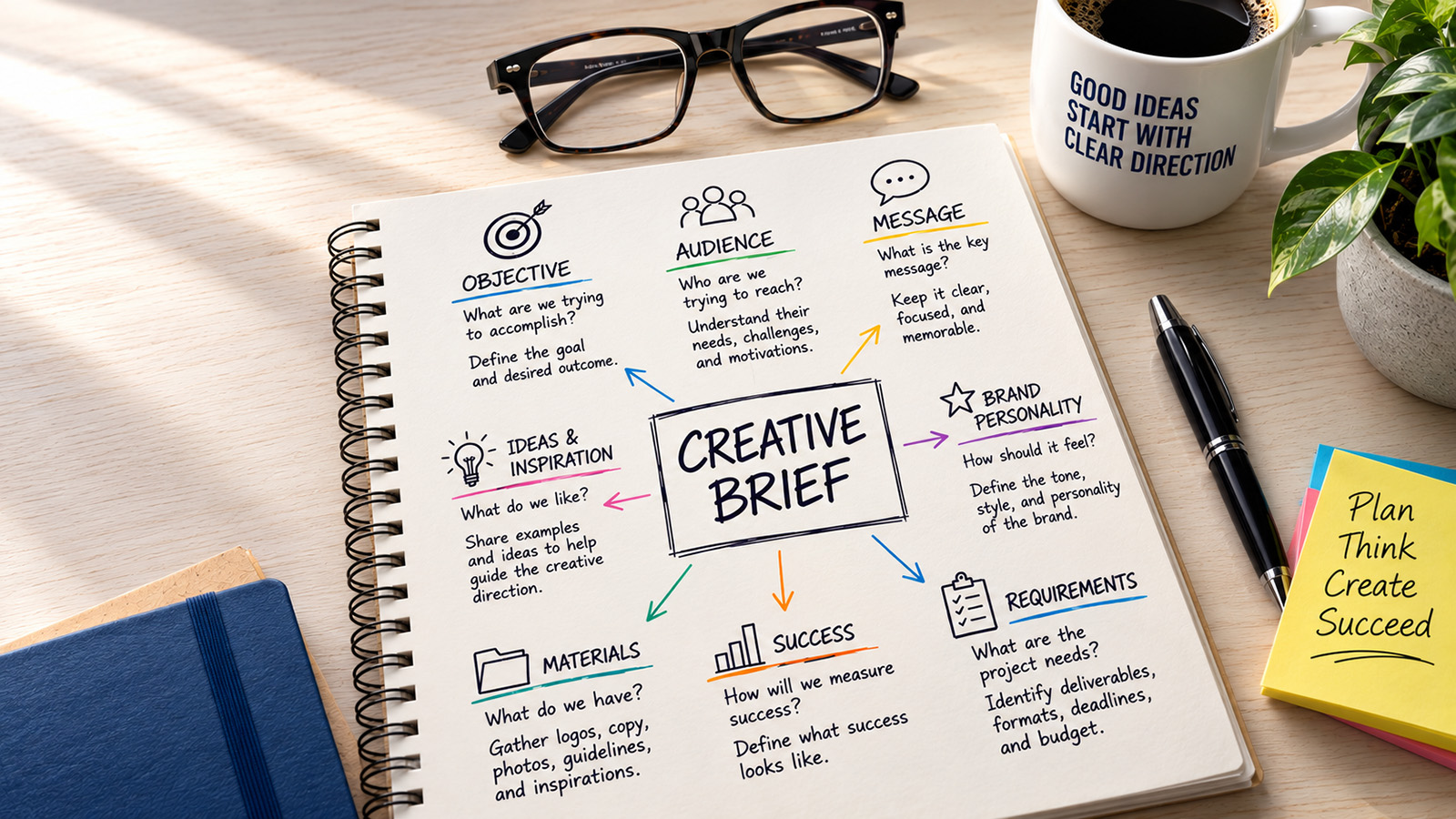
1. Define the Objective
Start by answering one simple question:
What are we trying to accomplish?
Are you trying to:
- Increase sales?
- Generate leads?
- Build brand awareness?
- Launch a new product?
- Promote an event?
- Educate customers?
A clear objective helps guide every creative decision that follows.
2. Know Your Audience
Great design speaks directly to the people it’s intended to reach.
Describe your audience as specifically as possible.
Consider questions like:
- Who are they?
- What industry are they in?
- What challenges do they face?
- What motivates them?
- What action do you want them to take?
Understanding your audience allows the creative solution to communicate more effectively.
3. Explain Your Message
If your audience remembers only one thing, what should it be?
Avoid trying to communicate everything at once. The strongest marketing pieces usually focus on one primary message supported by a few key points.
Clarity almost always beats complexity.
4. Share Your Brand Personality
Should the project feel:
- Professional
- Friendly
- Bold
- Innovative
- Luxurious
- Playful
- Trustworthy
Words like these help establish the tone and visual direction before design even begins.
5. Provide Supporting Materials
One of the biggest ways clients can help is by gathering materials before the project starts. Start with a Creative Project Planner to help gather the project focus.
Examples include:
- Creative Brief – Use our Creative Project Planner to help form your Creative Brief
- Final copy – Only minor edits to the copy once you have your approved final copy
- Logos – Include all file types such as vector files (.eps, .ai, etc) or high-resolution image types (.psd, .jpg, .png, etc)
- Brand Guidelines – This is important as it guides the designer with your brand standards. (If you do not have one, we can help)
- Photography and Graphic Assets – Provide any high-resolution images and quality assets such as illustrations
- Product Information – Provide any info about the product (sales sheets, data, charts, product web pages, etc)
- Previous Marketing Materials – Share any collateral so the designer sees what has been done prior
- Inspiration Examples – Share inspiration you have via web links or mood boards or Pintrest boards
- Competitor References – Knowing what and who are your competitors can help your brand stand out
Having these assets ready saves time and reduces unnecessary revisions later.
6. Identify Project Requirements
Every project has practical considerations.
Include details such as:
- Final size or format
- Print or digital
- Required deliverables
- Deadlines
- Budget
- Technical specifications
The more complete the information, the fewer surprises during production.
7. Define Success
How will you know the project was successful?
Success might mean:
- More inquiries
- Increased sales
- Better engagement
- Higher attendance
- Stronger brand awareness
- Improved customer experience
Knowing the desired outcome helps guide creative decisions throughout the project.
8. Leave Room for Creativity
This may be the most important tip of all.
A creative brief should provide direction, not dictate every design decision.
It’s perfectly fine to share ideas, examples, or inspiration. However, allowing your designer the freedom to explore creative solutions often leads to stronger, more effective results than trying to design the project before it begins.
Trust the process.
A Simple Creative Brief Checklist
Before your project begins, ask yourself:
- What is the goal?
- Who is the audience?
- What is the primary message?
- What action should people take?
- What materials do I already have?
- Are there brand guidelines to follow?
- What are the deadlines?
- How will success be measured?
If you can answer these questions, you’re well on your way to creating a creative brief that sets your project up for success.
Brad’s Take
One of the biggest misconceptions I encounter is that a creative brief is just paperwork. In reality, it’s one of the most valuable investments you can make before a project begins. A thoughtful brief doesn’t limit creativity, it gives it purpose.
Some of the most successful projects I’ve worked on started with a simple conversation that clearly defined the objective, the audience, and what success looked like. When everyone shares the same vision from the beginning, the creative process becomes more focused, revisions become more meaningful, and the final work delivers stronger results.
You don’t need a perfect creative brief. You just need a clear one. Give your designer a solid foundation, then trust them to do what they do best, creating thoughtful solutions that help your business communicate, connect, and grow.