Great design begins with great content.
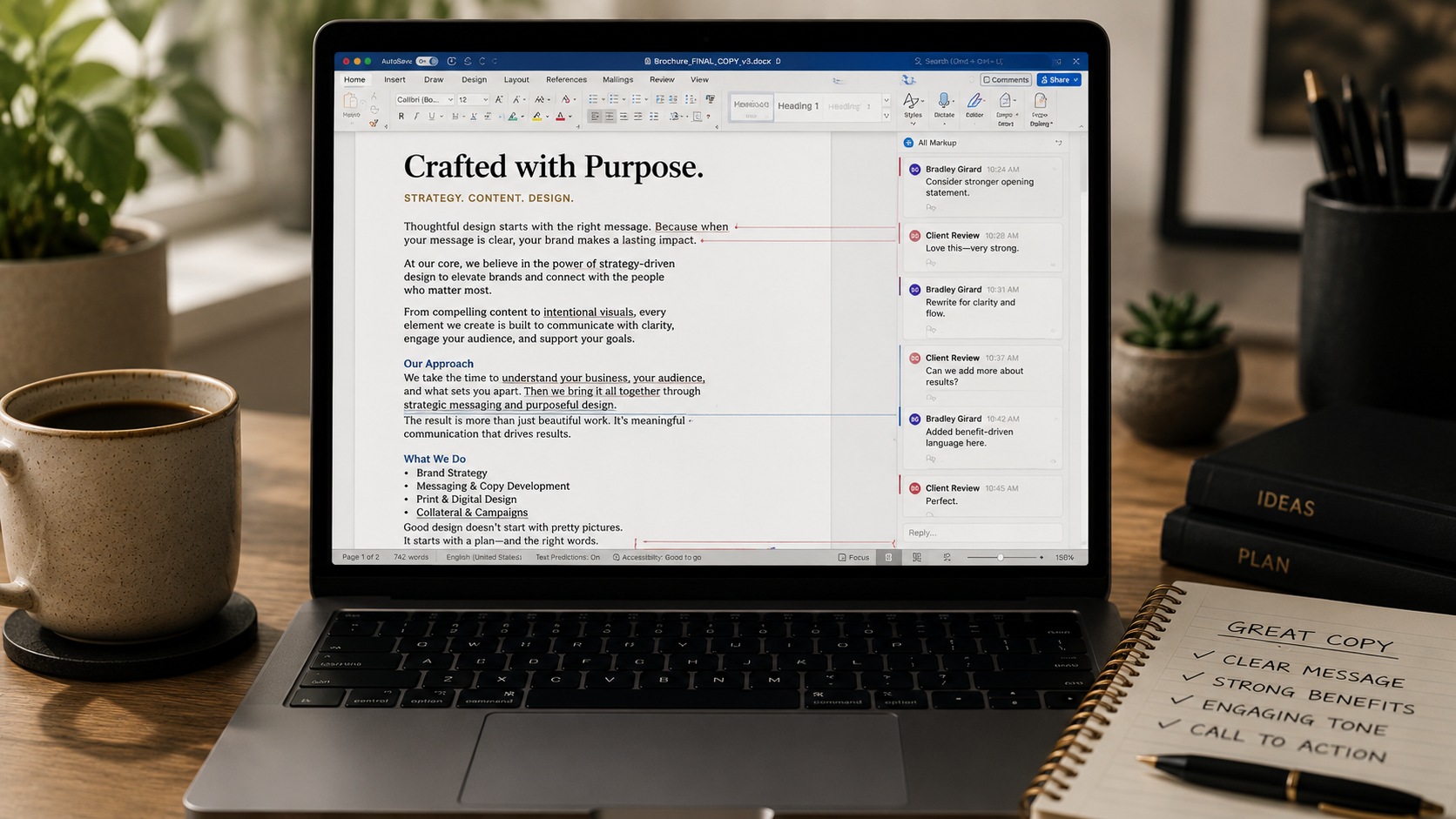
One of the most common misconceptions about graphic design is that the layout comes first and the words are added later. In reality, final copy before design leads to a stronger, more effective layout.
Whether it’s a brochure, catalog, website, advertisement, or direct mail piece, the copy provides the structure that guides every design decision. Headlines establish hierarchy, body copy determines spacing, and calls to action influence how information flows across the page.
Simply put, content gives design its purpose.
Design Is Built Around Content
Think of copy as the blueprint for a building.
An architect wouldn’t begin construction before knowing how many rooms the building needs or how people will move through the space. The same principle applies to design.
When the final copy is available from the beginning, it’s possible to create layouts that feel balanced, intentional, and easy to read. Images, typography, and white space can all work together to support the message rather than compete with it.
Good design isn’t about making words fit.
It’s about making ideas communicate clearly.
Revisions Cost More Than Tim
When placeholder copy is replaced with significantly longer or shorter content, the entire design often needs to be adjusted.
- Headlines wrap differently.
- Images shift.
- Columns expand.
- Pages may need to be added or removed.
What seems like a simple text update can quickly become a series of layout revisions that affect the entire project. Check out the Creative Insights article: How to Mark Up PDFs using Acrobat
Providing final copy upfront helps avoid unnecessary revisions, keeps projects moving efficiently, and often reduces both production time and cost.
Better Copy Creates Better Design
Design and copywriting should work together, not independently.
Clear, concise messaging gives the designer flexibility to create stronger visual hierarchy and more engaging layouts. When the message is focused, the design becomes focused too.
That’s why I always encourage clients to spend time refining their content before we begin designing.
A little extra preparation at the beginning often saves hours later in the project.
It Doesn’t Have to Be Perfect
Final copy doesn’t mean every sentence has to be flawless before design begins.
Minor edits are expected throughout the creative process. Check out the Creative Insights article: How to Mark Up PDFs using Acrobat
The goal is simply to have the messaging substantially complete before layout starts, so the design is built around the content rather than constantly adapting to it.
Think of it as giving your designer the complete puzzle before asking them to assemble the picture.
A Better Process Leads to Better Results
One of the reasons I developed the Creative Project Planner is to help clients organize their thoughts before the design process begins.
By defining your objectives, audience, key message, and supporting content early, we establish a strong foundation for the creative work that follows.
That preparation allows us to spend more time refining the design and less time restructuring layouts because the content keeps changing.
It’s a simple step that makes every project more efficient and ultimately produces a better result.
Brad’s Take
One of the best compliments I can receive is when a client says, “That was a smooth process.” Good projects rarely happen by accident. They happen because everyone begins with the same foundation.
When the copy is thoughtfully prepared before design begins, I can focus my energy where it belongs, creating marketing pieces that communicate clearly, engage your audience, and represent your brand at its very best.